
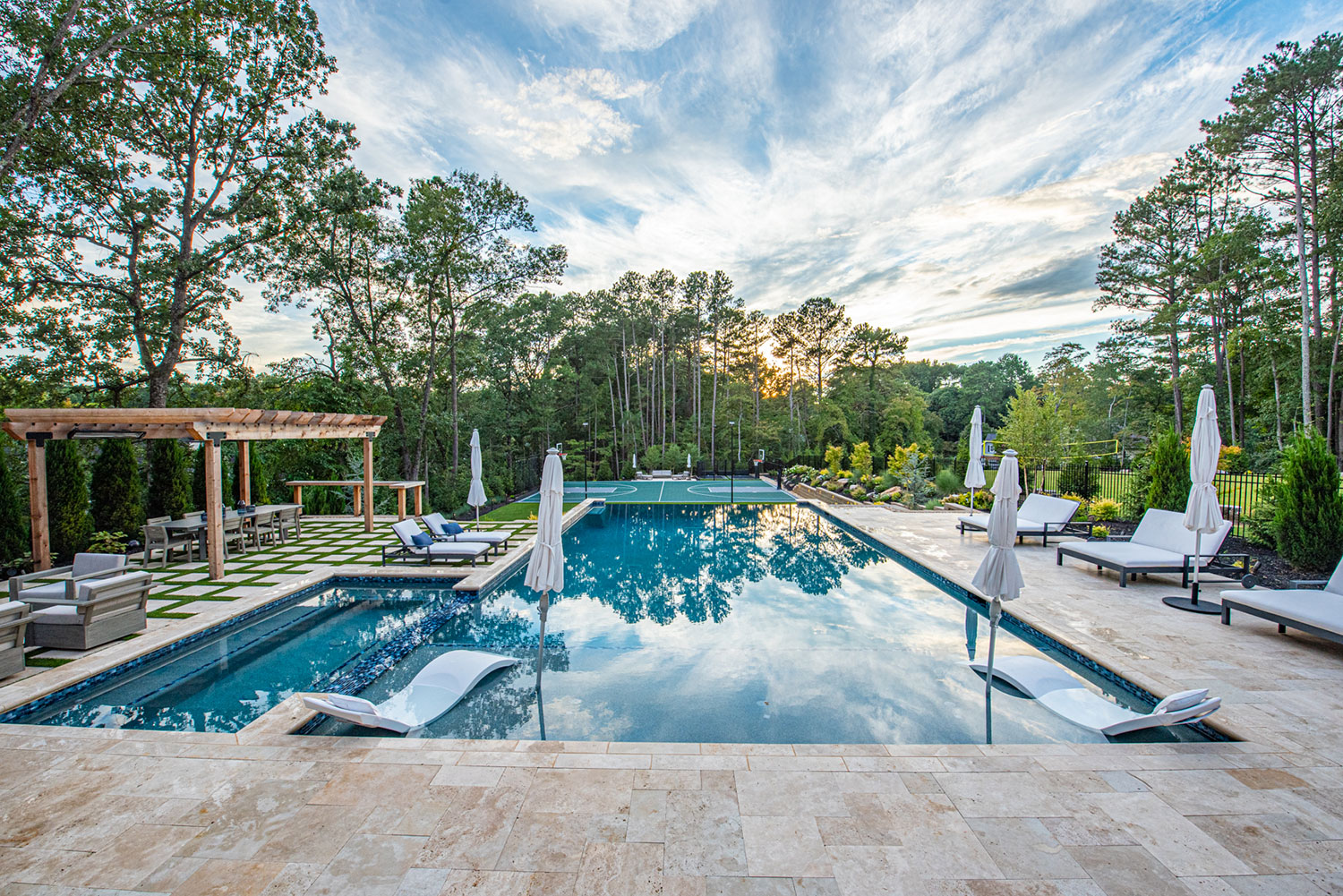
A new pool can become the place where family dinners linger, children spend long summer afternoons, and neighbors gather on weekends. But before the first design meeting, it helps to look beyond a builder’s starting price.
The number that matters is not simply the cost of the pool shell. It is the cost to build a safe, finished, usable backyard and to operate it during the first year. A realistic estimate includes site work, code compliance, exterior completion, a reserve for surprises, and first-year ownership spending. A useful starting formula is:
Pool and installation + site and compliance costs + exterior finishes + contingency + first-year operating costs = all-in pool budget
2026 Inground Pool Cost by Material and Size
Material is one of the biggest drivers of initial price, construction timeline, design flexibility, and future maintenance. The following ranges include professional pool installation and standard equipment allowances, but they should not be treated as complete backyard budgets.
Vinyl liner pool
Vinyl liner pools often offer the lowest entry cost for an inground pool. They can be a practical choice for homeowners who want a comfortable swimming space while keeping initial construction spending more contained.
- Small footprint, roughly 12-by-24 to 14-by-28 feet: $55,000 to $85,000 installed
- Medium footprint, roughly 16-by-32 to 16-by-36 feet: $70,000 to $105,000 installed
- Large footprint, roughly 18-by-36 to 20-by-40 feet: $90,000 to $135,000 installed
These ranges commonly exclude substantial decking, fencing, landscaping, drainage corrections, retaining walls, unusual excavation, premium heaters, automation, and major access challenges.
A vinyl liner is a replaceable wear component. Homeowners should plan a reserve for eventual liner replacement, with timing affected by sun exposure, water chemistry, use, and care. Rather than assuming a fixed date, ask the builder about the liner warranty and budget for replacement during the pool’s ownership life.
Concrete/gunite pool
Concrete, gunite, or shotcrete pools are typically the most customizable option. They can be shaped around a home, slope, landscape plan, tanning ledge, spa, water feature, or outdoor living area. That design freedom and the labor-intensive construction process generally place them at the upper end of the cost spectrum.
- Small footprint, roughly 12-by-24 to 14-by-28 feet: $85,000 to $135,000 installed
- Medium footprint, roughly 16-by-32 to 16-by-36 feet: $110,000 to $180,000 installed
- Large or highly customized footprint, roughly 18-by-36 to 20-by-40 feet and above: $150,000 to $275,000+ installed
Future finish work and resurfacing should also be part of long-range ownership planning. Learn more about the material itself in Georgia Classic Pool’s guide to the difference between shotcrete and gunite pools.
How the materials compare
- Vinyl liner: Usually the lowest initial installed cost, with moderate customization and a planned liner replacement need. It can fit buyers prioritizing an attractive pool with a more controlled entry budget.
- Concrete/gunite: Usually has the highest initial cost and longest construction timeline, but it offers the greatest design freedom. It can fit homeowners building a custom outdoor environment rather than choosing from preset pool forms.
What Is Included in an Inground Pool Installation Quote?
A quote can sound complete while still leaving important pieces outside its scope. Read every proposal as a list of included work, not just a total price.
A typical pool construction scope may include:
- Pool shell or structural construction
- Excavation, hauling, and basic grading
- Plumbing lines and electrical connections
- Equipment pad, pump, filter, and circulation equipment
- Basic startup, water balancing, and orientation
Entry-level quotes frequently exclude or limit costs for engineered plans, surveys, rock removal, unsuitable soil, retaining walls, groundwater management, drainage improvements, crane access, utility relocation, premium interior finishes, heaters, automation, and saltwater systems.
Exterior completion deserves its own budget line. A finished pool area may require coping, decking, fencing or another code-compliant barrier, self-closing gates, landscaping, irrigation repair, landscape lighting, and enough usable space for loungers, dining, and circulation. Planning the whole yard early helps avoid a beautiful pool surrounded by unfinished ground.
Bid-comparison checklist
Before comparing prices, mark each item as included, excluded, allowance only, or not addressed in every bid:
- Permits, engineering, surveys, and inspections
- Excavation depth, hauling, rock, soil export, and dewatering
- Structural work, plumbing, electrical, and equipment specifications
- Heater, salt system, automation, lights, and cover provisions
- Coping, deck material, square footage, and drainage details
- Fencing, gates, alarms, and barrier compliance
- Landscaping repairs, irrigation repairs, and final grading
- Project schedule, payment draws, change-order process, and warranties
A low bid is not necessarily a lower project cost. It may simply leave more work for later. Before signing, use a detailed contractor-selection process such as Georgia Classic Pool’s guide on how to choose the right pool builder.
How Location and Site Conditions Change Pool Cost
National estimates are a baseline, not a final budget. Local labor, permitting, weather, and site conditions can move a project meaningfully in either direction.
Common regional cost adjustments
- High-labor-cost markets: Major metro areas and markets with high demand, complex permitting, or higher subcontractor costs often land above national planning ranges.
- Cold-weather markets: Deeper frost considerations, seasonal construction limits, winter covers, winterization, and opening and closing services can increase both project and ownership costs.
- Rock or difficult-soil areas: Bedrock, expansive clay, difficult spoil removal, and groundwater can add excavation, drainage, engineering, or structural requirements.
- Hot, dry markets: Longer swim seasons can increase water replacement, electricity use, and evaporation-related maintenance.
- Dense or access-restricted neighborhoods: Narrow side yards, tight lots, overhead utilities, and limited staging space can make equipment access more expensive.
A sloped yard may need retaining structures and carefully designed drainage. A high water table can require management during excavation and may influence structural planning. Even a mostly level yard can become more expensive if a machine cannot enter it without removing fencing, landscaping, or other obstacles.
For Georgia homeowners, local review is especially important. Metro Atlanta and North Georgia sites can vary considerably in grade, soil, access, municipal requirements, and outdoor-living scope. Confirm local permit and utility requirements before treating an online estimate as a final number.
Permits, Fencing, Taxes, and Insurance: Costs Before You Build
There is no universal U.S. permit fee or one code requirement that applies everywhere. Cities and counties may regulate zoning, setbacks, drainage, electrical work, plumbing, inspections, and safety barriers differently.
The Consumer Product Safety Commission’s CPSC pool-barrier guidance is a helpful safety reference, but local building officials establish the binding requirements for a specific address. Contact the local building department before construction to verify applicable rules, including barrier design, gate operation, setbacks, and drainage expectations.
A pool may also affect assessed value and property taxes, depending on local assessment practices. Ask the county assessor how residential improvements are handled rather than assuming the pool will create a specific tax change.
Call your homeowners insurance carrier before construction begins. Ask about liability limits, pool-barrier conditions, equipment coverage, policy changes, and whether an umbrella policy makes sense for your household. The answer depends on the insurer, coverage, and property, so confirm it in writing.
The Hidden Cost of Owning an Inground Pool
The first year can cost more than later years because the backyard is still being completed. Build these expenses into the financial plan instead of treating them as afterthoughts.
First-year ownership expenses to budget for
- DIY supplies or professional maintenance service
- Chemicals and water testing
- Electricity for circulation, lighting, and heating
- Water for filling, top-offs, and evaporation
- Insurance premium or coverage changes
- Seasonal opening, closing, and winterization where applicable
- Safety equipment and a suitable cover
- Furniture, umbrellas, storage, and shade solutions
- Landscaping, plant replacement, irrigation repairs, and final touches
A reasonable first-year planning allowance for these items can range from $3,000 to $12,000+, depending on climate, pool type, service level, heating, and how much backyard completion remains after construction.
Recurring annual ownership costs
For a homeowner handling routine work personally, annual recurring costs may fall around $1,500 to $5,000+ before major repairs and replacement reserves. Professional weekly service, seasonal work, heating, and higher utility use can move the annual figure to $4,000 to $10,000+.
The exact total depends on local energy and water rates, pool size, pump schedule, heater use, weather, and whether a homeowner performs cleaning and chemistry work personally. In colder climates, opening, closing, winterizing, and winter covers should be separate line items, not surprises.
Replacement reserves to keep in the plan
Major components eventually wear out. Rather than borrowing again when they do, set aside a modest monthly reserve.
- Vinyl liner: Plan for future replacement based on condition and warranty terms.
- Pump and motor: Set aside funds for eventual repair or replacement.
- Filter: Budget for replacement parts, media, or eventual unit replacement.
- Heater: Expect maintenance and eventual replacement over its service life.
- Safety and winter covers: Plan for wear, repair, or replacement.
- Automation components: Sensors, control panels, and actuators can require service.
- Concrete finishes: Concrete/gunite pools require long-range planning for finish work or resurfacing.
A monthly affordability example
Suppose a homeowner estimates $6,000 in annual operating, maintenance, and reserve costs. Dividing that by 12 produces a monthly ownership allowance of $500.
If the proposed pool-loan payment is $1,050 per month, the more honest monthly pool commitment is about $1,550, before considering any increase in insurance or property taxes not already included. That is the payment picture to test against household cash flow, not the loan payment alone.
Does an Inground Pool Increase Home Value?
A pool can improve buyer appeal, especially where pools are common, the climate supports long swim seasons, and the backyard feels cohesive and well maintained. Buyer appeal, however, is not the same as a guaranteed appraisal adjustment.
An appraiser generally looks to recent, relevant comparable sales with similar pools. The supported value can depend on local demand, pool condition, climate, lot utility, neighborhood norms, and whether the feature feels like an expected amenity or a highly personal customization. The Appraisal Institute emphasizes market-supported analysis rather than a fixed percentage of construction cost.
A pool may add little, some, or occasionally meaningful value in a particular market. Installation cost is rarely guaranteed to be fully recovered at resale. For a Georgia-specific perspective, see how much value a swimming pool may add to a house.
Keep records that can help an appraiser and future buyer understand the improvement:
- Permit and inspection records
- Contractor agreement and final invoice
- Pool specifications and equipment list
- Warranties and manuals
- Construction and finished-project photos
- Service, repair, and maintenance records
Set a Pool Budget Before You Finance
Borrowing can be useful when it supports a well-planned project. It becomes riskier when you choose financing before you know the actual cost. A HELOC, home equity loan, or cash-out refinance uses home equity and comes with secured-borrowing trade-offs. Unsecured pool loans may be offered through lenders such as LightStream, HFS Financial, or Lyon Financial, but rates, terms, fees, and approval standards vary. Review lender disclosures carefully and compare the complete cost of borrowing.
Use this four-step process before applying:
- Select a material and realistic size. Start with vinyl liner or concrete/gunite, then choose a footprint that fits your yard and how your family will use it.
- Add location and site factors. Account for access, grade, excavation conditions, local labor, permit requirements, drainage, and climate.
- Add excluded work and contingency. Include decking, barriers, landscaping, upgrades, and a contingency reserve for unknown site and scope changes. Do not finance precisely to an early builder estimate.
- Include first-year ownership costs. Add operating expenses, opening or closing needs, safety items, and post-build landscaping to the project budget.
Then subtract the cash reserves you truly want to apply without leaving your household unprotected. Take only the resulting amount to financing and payment-comparison tools. Test multiple loan terms and rates, and compare the payment with your monthly ownership allowance.
For homeowners considering secured borrowing, a conversation with a qualified lender about the differences among a HELOC, home equity loan, and cash-out refinance should come after you set your full budget. If conventional mortgage financing is part of a future home purchase or refinance plan, remember that Fannie Mae lending requirements and lender underwriting can change; confirm current rules with the lender.
A thoughtful pool plan is not about choosing the lowest number. It is about building the backyard you want with a budget that still feels comfortable after the project is complete. Georgia Classic Pool can help homeowners in the Atlanta area think through design, site conditions, and the outdoor space surrounding the water before construction begins.
Frequently asked questions
What is the average cost to install an inground pool in 2026?
A broad nationwide installed-project planning range is approximately $65,000 to $180,000+, with a planning midpoint around $105,000. Installed cost depends on material, dimensions, site access, excavation conditions, local labor, decking, fencing, equipment, permits, and landscaping. The shell alone is not the installed project price.
Which is cheapest to install: vinyl or concrete?
Vinyl liner pools usually have the lowest initial installed cost. Concrete/gunite typically costs the most because it is highly customizable and labor-intensive. Compare like-for-like scopes, including electrical, decking, fencing, drainage, and landscaping.
What are the hidden costs of owning an inground pool?
Common costs include DIY supplies or professional service, chemicals, electricity, water, insurance changes, repairs, and seasonal opening or closing in applicable climates. Homeowners should also maintain reserves for liners, pumps, heaters, filters, covers, and concrete finish work. First-year spending can be higher because safety equipment, furniture, landscaping, and upgrades are often added after installation.
Does an inground pool increase home value or appraisal value?
A pool may improve buyer appeal in the right climate and neighborhood, but it does not automatically return its full installation cost in an appraisal. Appraisers generally rely on recent comparable sales with similar pools and consider local demand, condition, lot utility, and whether pools are typical for the market.
Do I need permits and additional insurance for a new pool?
Permit, barrier, electrical, plumbing, drainage, and setback requirements vary by city and county. Verify local requirements before signing a contract. Also ask your insurance carrier whether the pool changes liability coverage, equipment coverage, safety conditions, or umbrella-policy needs.
Ready to start the conversation for your inground pool? Get started today by calling 678-736-7966 or filling out our form.