
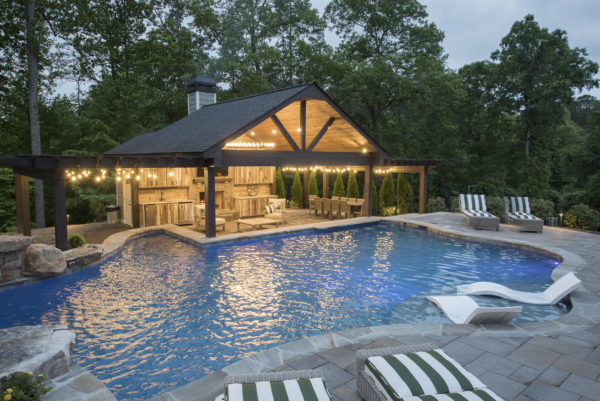
A pool cabana is a poolside shelter, usually with a roof and one or more enclosed sides, built for changing, lounging, storage, shade, and sometimes a bathroom or bar.
The right poolside structure can turn a beautiful pool into a backyard that works better for everyday life. It can provide a dry place to set down towels, a shaded spot for lunch, privacy for guests changing clothes, or a comfortable gathering space when afternoon sun arrives.
A cabana, gazebo, and pergola can all improve the pool area, but each solves a different problem. The best choice depends on whether your first priority is privacy, all-weather shade, open-air entertaining, amenities, budget, or a lower-profile architectural feature.
What Is a Pool Cabana?
A pool cabana is designed around the realities of pool use: wet swimmers, dripping towels, sunscreen, floats, equipment, and the need for privacy. Unlike a simple shade structure, it often creates distinct functional zones for changing, storage, seating, and serving.
At one end, a cabana may have a lockable storage room for towels, floats, and poolside supplies. At the other, it may open toward the water with a shaded seating area. Larger designs can include a wet bar, outdoor kitchen, shower, powder room, or fully enclosed bathroom.
Cabanas range from open-sided, pavilion-style structures to enclosed accessory buildings with plumbing and electricity. That flexibility is a major advantage, but it also means the planning requirements can vary widely.
A thoughtful layout keeps the cabana useful without interfering with circulation around the pool. For example, the changing and storage side may face away from the pool for greater privacy, while the covered lounge area faces the deck and water. Depending on local requirements, the structure may sit outside the pool barrier, with a clear, safe path through a self-closing gate.
Pool Cabana vs. Gazebo vs. Pergola at a Glance
Here is the practical difference between these three structures in a pool setting:
- Pool cabana: Best for privacy, changing, secure storage, and amenities. It usually has a solid roof and one or more walls or panels. A cabana offers the strongest path to adding a bathroom or shower, although that also increases cost and approval requirements.
- Gazebo: Best for covered outdoor living with open views. A gazebo generally has a solid roof and open sides, making it a natural choice for a dining table, lounge furniture, or conversation area that needs dependable overhead cover.
- Pergola: Best for filtered shade and architectural definition. Traditional open rafters provide partial shade, not full rain protection. A retractable canopy, louvered roof, or shade fabric can significantly improve performance.
For a pool-deck example, choose a cabana when guests need a place to change and a place to store towels. Choose a gazebo for roofed seating or dining near the pool. Choose a pergola for loungers or an outdoor kitchen/bar where you want shade without visually closing in the yard.
Installed pricing should always be qualified. The structure itself is only part of the investment. Labor, access, footings, utilities, site conditions, drainage work, and local requirements can materially affect the final number.
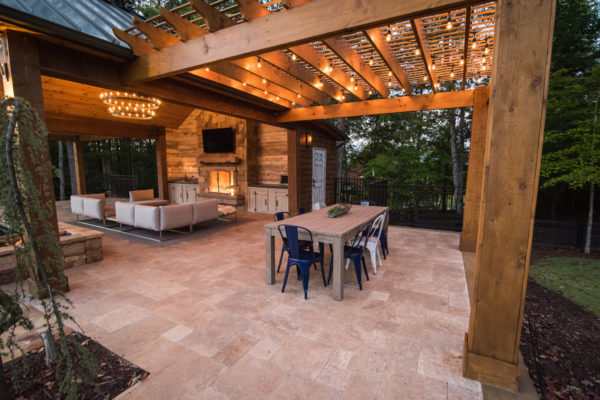
Pool Cabana vs. Gazebo vs. Pergola: Privacy, Shade and Weather Protection
A pool cabana offers the clearest privacy advantage. Solid walls, partial walls, sliding panels, or screened sections can create a comfortable changing area and shield a lounge zone from wind and late-day sun. A lockable enclosed section can also keep towels, pool floats, and appropriate pool supplies out of sight.
If you store pool chemicals in or near a cabana, keep them in a secure, well-ventilated area, separate from food, beverages, and furnishings. Use product labels and local requirements to guide storage decisions.
A gazebo usually offers more dependable rain protection than a standard pergola because it has a solid roof. Its open sides preserve views and airflow, which is appealing beside a pool. However, open sides also mean less privacy and less protection from wind-driven rain or a low western sun. Curtains, screens, or partial walls can make the space more comfortable, but they should be rated for outdoor and wet-area exposure.
A traditional pergola creates filtered shade through its open lattice. That can be ideal over chaise lounges, where a little sun and breeze are welcome. It is not the same as a weatherproof roof. A retractable canopy, louvered pergola system, or UV-rated shade fabric can offer more control, but select and anchor each addition for wind exposure.
Poolside materials must withstand splashing, UV exposure, moisture, and, in some areas, salt-air corrosion. Choose outdoor-rated fabrics and furnishings, corrosion-resistant hardware, and easy-to-clean finishes for frequent wet use. Plan for drainage so water does not collect at posts, footings, door thresholds, or the edge of the pool deck.
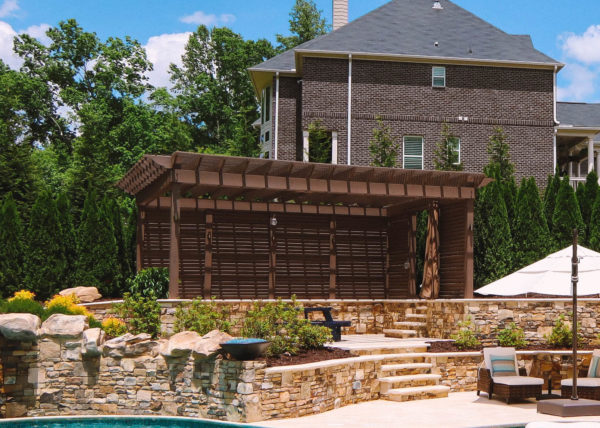
How Much Does a Pool Cabana, Gazebo or Pergola Cost?
As a general planning rule, a simple pergola usually costs less than a roofed gazebo, while a finished cabana with walls, plumbing, HVAC, or a bathroom is generally the most expensive option. But a basic structure price is not an installed project budget.
Your project scope may also include:
- A concrete slab, piers, footings, or deck reinforcement
- Pool-deck modifications and repairs
- Drainage grading, drains, or water-management details
- Electrical trenching, lighting, receptacles, and panel capacity
- Water supply, waste lines, venting, and fixture installation
- Permits, engineering, inspections, and zoning review
- Delivery access, equipment access, assembly, and anchoring
- Landscape restoration after utility or foundation work
Prefabricated kits can simplify sourcing and reduce design time, but they don’t eliminate the need for a suitable foundation, proper anchoring, delivery access, assembly, or local code review. A kit must still work with your pool deck, yard grade, wind conditions, and permit requirements.
For inspiration on cabana forms and finishes, explore Georgia Classic Pool’s pool cabana ideas gallery.
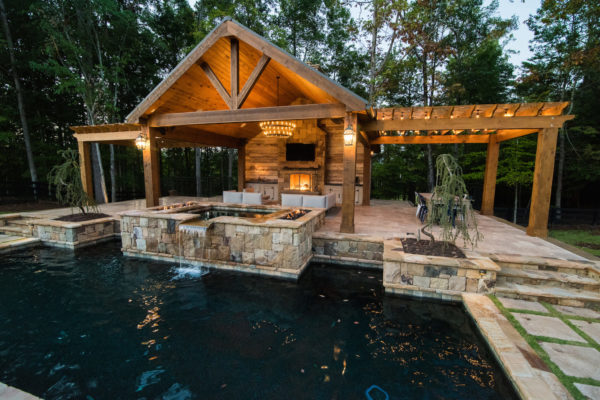
Choose a Cabana If You Need Privacy, Storage, or a Bathroom
A cabana is often the strongest choice for homeowners who want more than shade. It works especially well when you need a changing room, secure storage for towels and pool floats, a service zone for food and drinks, or a bathroom and shower.
A smaller three-sided cabana can sit beside the deck and provide a private changing zone plus a bench and towel hooks. A modern cabana with sliding panels can open for airflow during the day and close when you need privacy. A larger enclosed structure may include a wet bar and powder room, creating a more complete outdoor living destination.
For pool-ready construction, consider materials such as powder-coated aluminum, stainless or marine-grade hardware where appropriate, fiber-cement siding, porcelain tile, composite trim, and moisture-resistant finishes. These choices handle chlorine splash, humidity, sun, and frequent cleaning better than materials intended only for sheltered use.
Because enclosed cabanas can function as accessory structures, they are more likely to trigger zoning, structural, electrical, and plumbing requirements. A bathroom adds another layer of review. Resolve the permit path and utility plan before selecting finishes or ordering a prefabricated cabana kit.
For more examples of cabana possibilities, visit Georgia Classic Pool’s cabanas page.
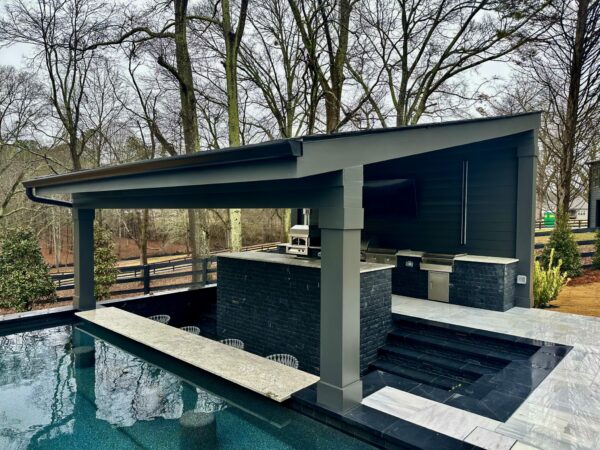
Choose a Gazebo If You Want Reliable Covered Outdoor Living
A gazebo is a good fit when you want a roofed dining, lounging, or conversation space where open-air views matter more than privacy. It gives the pool area a defined destination without creating the enclosure of a cabana.
One practical approach is to place the gazebo beyond the main splash zone, creating a more comfortable dining area with less water underfoot. Another option is to place it adjacent to the pool and use screen panels, outdoor-rated lighting, and durable furnishings to make it usable from day into evening.
Roof choice matters. Metal roofing can be durable and low-maintenance, while shingles may help a gazebo coordinate with the home. Wood components offer warmth but need regular inspection and finishing in humid conditions. Composite elements can reduce some upkeep. In salt-air environments, corrosion-resistant fasteners and hardware deserve special attention.
Even an open-sided gazebo may require permits because of its footprint, permanent footings, roofed area, height, or electrical additions. Treat it as a site and safety project, not simply a piece of outdoor furniture.
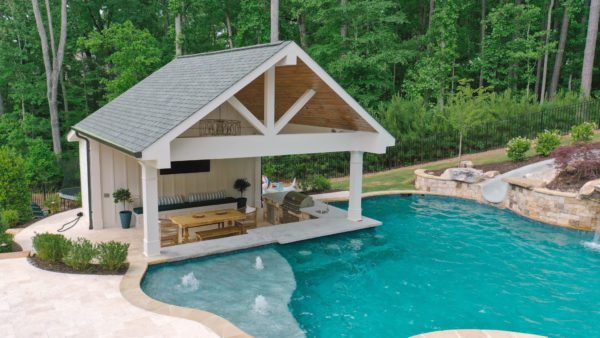
Choose a Pergola If You Want a Lower-Profile Shade Feature
A pergola works well for homeowners who want architectural definition, partial shade over loungers, or a frame for a poolside outdoor kitchen or bar without constructing an enclosed building. It can make a pool deck feel more intentional while keeping it open and maintaining sightlines.
You can improve its performance with a retractable canopy, adjustable louvers, UV-rated shade fabric, or a freestanding aluminum pergola. Climbing plants can soften the look, but use them carefully. They add maintenance, can hold moisture against components, and may create debris around the pool.
A pergola’s limitations matter just as much: open rafters don’t provide the privacy, weather sealing, lockable storage, or bathroom potential of a cabana. Even a louvered pergola should be evaluated for drainage and wind performance, not assumed to be fully weatherproof in every condition.
For a small pool area, a slim pergola aligned along one deck edge can shade a pair of loungers without crowding circulation around the water. Keeping posts clear of main walkways reduces trip hazards and preserves easy access around the pool.
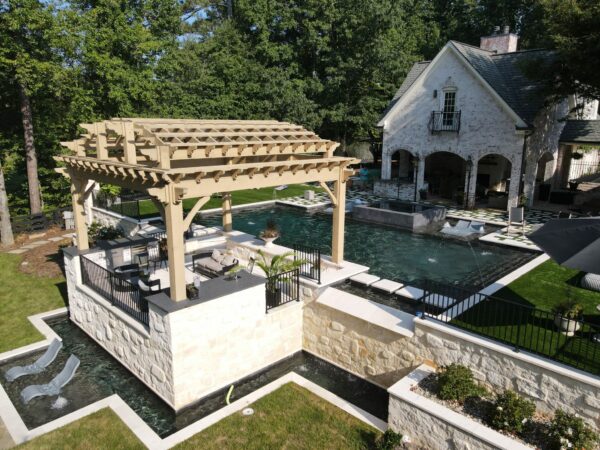
Pool Cabana Permit and Safety Considerations
Before choosing a structure, confirm the rules that apply to your property. Local zoning and building requirements can affect the size, location, height, construction method, and utilities allowed for a cabana, gazebo, or pergola.
The pool barrier must remain safe and functional. A new structure should not obstruct required access, interfere with gate operation, or create a climbable route over or around the barrier. Self-closing and self-latching gate requirements still apply, and emergency access should remain clear.
Anchoring is also essential. Gazebos, louvered pergolas, shade roofs, and prefabricated kits can experience significant wind loads. Select proper foundations, connections, and hardware for the site and local conditions rather than relying on appearance alone.
Electrical and plumbing require careful coordination. Outdoor-rated receptacles and lighting, GFCI protection where required, equipment clearances, utility locates, and licensed installation are all important. Bathroom and shower work may involve water supply, drainage, venting, electrical, and fixture requirements that deserve professional planning.
The Best Poolside Structure for Your Priorities
The simplest answer is this: choose a cabana for privacy and amenities, a gazebo for dependable covered gathering space, and a pergola for flexible, lower-profile shade.
Before requesting quotes, make a short project checklist:
- How will the structure be used: changing, dining, lounging, storage, or serving?
- What footprint preserves comfortable circulation around the pool?
- How much privacy is necessary?
- Do you need a solid roof, filtered shade, or adjustable coverage?
- Which materials will hold up to UV, moisture, chlorine splash, and local conditions?
- Will you need lighting, outlets, water, drainage, or a bathroom?
- How will runoff move away from the structure and pool deck?
- What is the permit path, including setbacks and pool-barrier review?
A well-planned poolside structure should feel like part of the backyard, not an afterthought added beside the water. Georgia Classic Pool can help Atlanta-area homeowners consider how a cabana or outdoor living feature fits the pool, deck, landscape, and how their family gathers. Explore the Cabana at the Manor project for a closer look at what an integrated poolside space can become.
Ready to start your next backyard project? Contact Georgia Classic Pool today.
Frequently asked questions
What is a pool cabana?
A pool cabana is a covered poolside structure that provides shade plus more functional space for changing, relaxing, storing towels and equipment, or adding amenities such as a bar, bathroom, or shower. It usually provides more enclosure and privacy than a gazebo or pergola.
Is a pool cabana better than a gazebo?
A cabana is better when privacy, a place to change, secure storage, or a bathroom are priorities. A gazebo is often better for a roofed open-air seating or dining area when you want rain protection without building an enclosed accessory structure.
Is a pergola good by a pool?
A pergola works well for filtered shade, visual definition, and a lower-profile lounging or dining area near a pool. It provides less privacy and rain protection than a cabana or roofed gazebo unless it includes a retractable cover or louvered roof.
Do you need a permit for a pool cabana?
Often, yes, especially for permanent foundations, a roofed or enclosed structure, electrical service, plumbing, or a bathroom. Requirements vary by location, so confirm setbacks, pool-barrier rules, drainage, height, and utility requirements with the local building department before construction.
Can a pool cabana have a bathroom and shower?
Yes. A larger enclosed cabana can include a bathroom and shower, but it requires space planning plus plumbing, drainage, venting, electrical, and local approvals. This makes it more complex and typically more expensive than an open-sided pool shelter.