
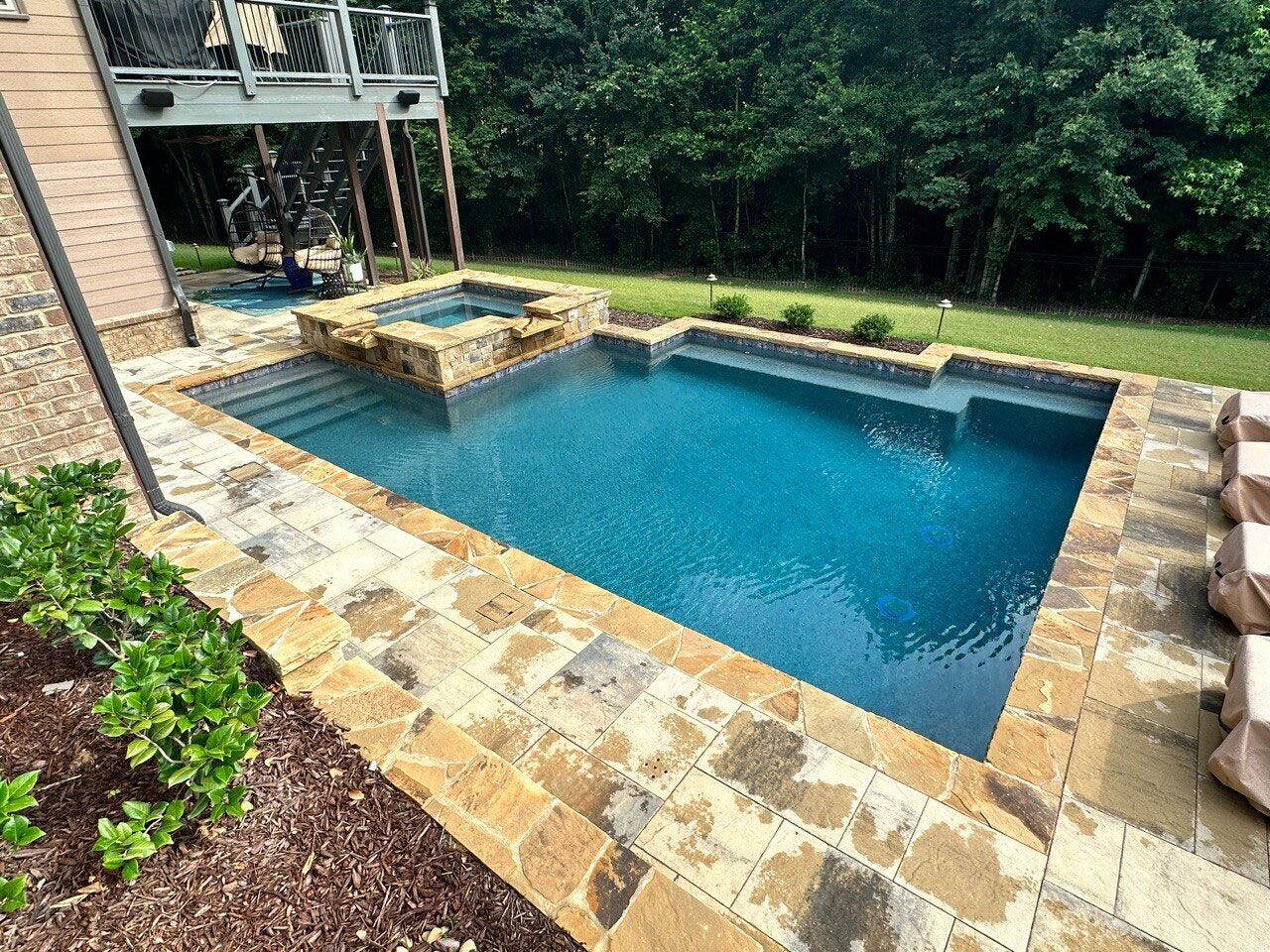
A new pool can begin with a simple picture: a classic rectangle, clear water, comfortable decking, and a backyard built for family time. Turning that picture into a reliable budget takes more than a national average or a base-pool price.
How Much Does an Inground Pool Cost in Cobb County, GA in 2026?
Countywide installed-price planning range: $85,000 to $225,000+ for a typical completed residential inground pool project in Cobb County, Georgia.
This is a planning range, not a builder quote. It reflects a completed project with the pool structure, core equipment, excavation, a reasonable decking allowance, required electrical work, permits, safety-barrier planning, startup, and basic site restoration. Smaller, straightforward projects may fall below the range. Larger custom projects, difficult sites, integrated spas, premium outdoor living features, and substantial structural site work can move well above it.
Two Cobb County backyards can receive materially different pool prices for similar dimensions. One may allow equipment and excavation machinery to reach the backyard easily. The other may have a narrow side yard, a steep grade, drainage concerns, buried utilities, difficult soil, or rock. Decking selection, equipment choices, fencing, and the reviewing jurisdiction also affect the final scope.
After reviewing the factors below, the most useful next step is a site-specific estimate. A builder needs to see the access route, grade, drainage patterns, existing structures, and the full backyard plan before defining a dependable project total.
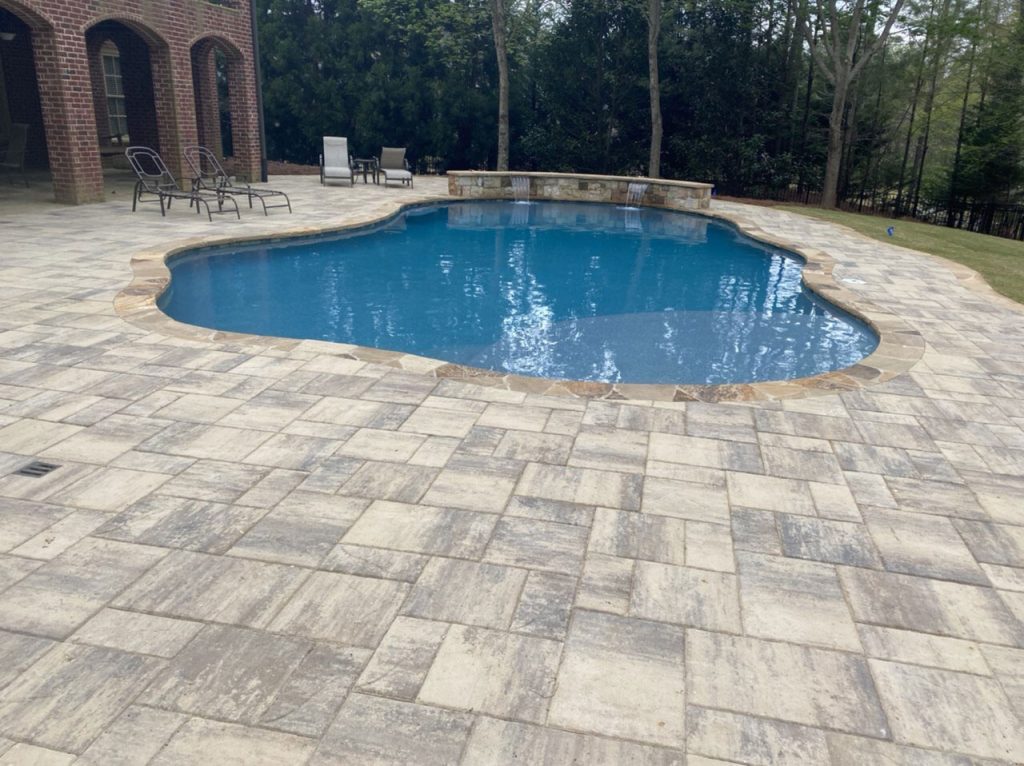
Cobb County Inground Pool Cost by Pool Type
The right material depends on how you want to use the backyard, how quickly you hope to build, and how much freedom the lot requires. The following ranges are installed planning ranges for standard residential projects before unusually difficult access, significant retaining work, extensive demolition, or major landscape construction.
Shotcrete pool
You may hear concrete pools called “gunite” pools. Gunite is the more familiar name, but most concrete pools built in Georgia today, including Georgia Classic Pool’s, are shotcrete pools.
- Typical installed range: approximately $100,000 to $220,000+
- Typical construction timeline: generally longer because excavation, steel, plumbing, shotcrete application, curing, tile, coping, decking, finish work, inspections, and startup occur in sequence
- Customization: highest level of flexibility for shape, depth profile, tanning ledges, spas, swim-up features, water features, and integrated outdoor living plans
- Maintenance considerations: finish type, water balance, cleaning practices, and long-term surface renewal planning all matter
- Best fit: homeowners who need a custom footprint or want the design freedom to create a pool around a sloped, irregular, or feature-rich backyard
Shotcrete supports a timeless rectangular pool just as well as a complex freeform design. It also gives the design team room to solve site-specific challenges and create integrated features. You can explore completed concepts in Georgia Classic Pool’s Timeless Classic gallery.
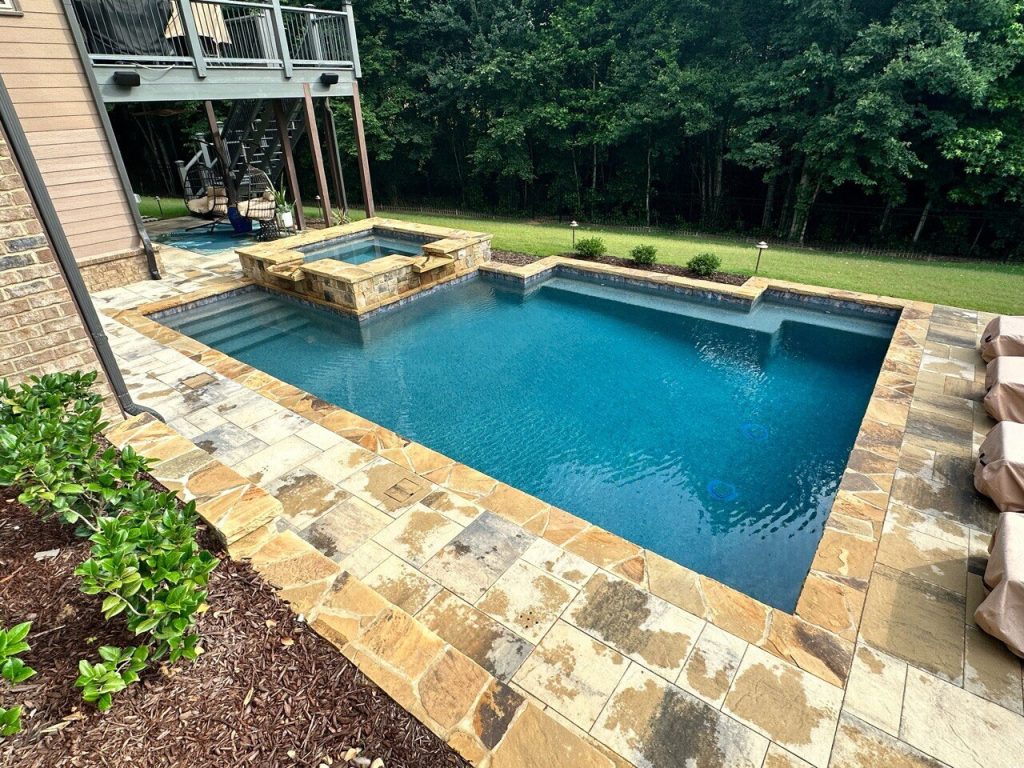
Vinyl-liner pool
- Typical installed range: approximately $65,000 to $115,000+
- Typical construction timeline: often shorter than a custom shotcrete build, though permitting, weather, site work, and scheduling still affect the calendar
- Customization: more flexible than a fixed fiberglass shell but generally less adaptable than a fully custom shotcrete pool
- Maintenance considerations: liners require careful water management and can need replacement over time; homeowners should include future liner replacement in long-term ownership planning
- Best fit: homeowners seeking a lower initial entry point who understand the liner’s durability and replacement tradeoffs
A lower initial price does not automatically mean a lower total ownership cost, just as a higher initial price does not automatically make one pool the best investment. The right choice fits the property, desired design, maintenance expectations, and budget.
Sample Budget: Classic Rectangular Shotcrete Pool in Cobb County
The following example shows how a base-pool number becomes a complete project budget.
Scenario assumptions: A 16-by-32-foot classic rectangular shotcrete pool, approximately 3.5-foot to 6-foot depth profile, standard plaster finish, waterline tile, standard coping, one skimmer, returns, a variable-speed pool pump, cartridge filter, basic controls, and a standard concrete decking allowance. The property has workable construction access, moderate grade, no known rock beyond normal excavation conditions, and no major demolition. This example is based on Cobb County, Georgia pricing checked in August 2026.
Core project budget
- Base shotcrete pool construction, including shell, steel, plumbing, standard plaster finish, tile, coping, and core circulation equipment: $78,000 to $96,000
- Excavation and site preparation under the stated normal-soil assumption: $8,000 to $14,000
- Concrete decking allowance, approximately 600 to 750 square feet: $11,000 to $18,000
- Electrical work for pool equipment, bonding, and standard connections: $4,000 to $7,500
- Permits, plan review, inspections, and applicable administrative allowances: $2,500 to $6,000
- Barrier or fencing allowance: $4,000 to $10,000
- Startup, orientation, cleanup, and basic restoration allowance: $2,500 to $5,000
- Construction contingency for ordinary unknowns: $7,500 to $15,000
Illustrative completed-project budget: approximately $117,500 to $171,500.
That total is intentionally more useful than a base-pool price because it recognizes that a finished, safe, usable pool includes more than the vessel itself.
Optional upgrades to price separately
Optional items should be shown as separate lines so you can decide where to invest.
- Heater/gas lines: $4,500 to $9,000+
- Saltwater chlorinator: $1,500 to $3,000+
- Automation package: $2,000 to $6,000+
- LED lighting upgrades: $1,000 to $4,000+
- Tanning ledge: $5,000 to $12,000+
- Water feature: $3,000 to $15,000+
- Integrated spa: $18,000 to $40,000+
- Upgraded decking, such as pavers, natural stone, or premium finishes: variable by square footage and material
- Landscaping restoration or a more complete landscape plan: variable by scope
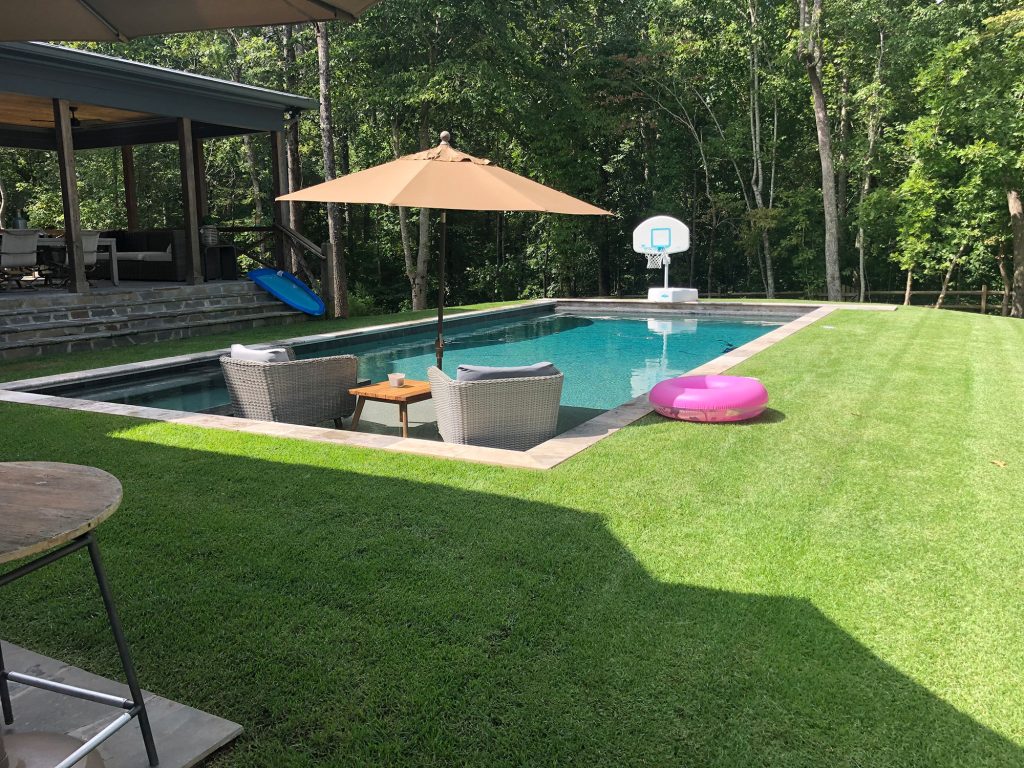
This example excludes major retaining walls, substantial rock removal, extensive demolition, dewatering, unusual access constraints, major utility relocation, large drainage systems, outdoor kitchens, structures, and broad landscaping work. Those conditions can change the budget significantly.
What Raises or Lowers Your Cobb County Pool Quote?
Pool dimensions matter, but they are only the start. A longer perimeter, deeper excavation, complex shape, or custom depth profile affects excavation, steel, plumbing, finish materials, and decking quantities.
Cobb County sites also present variables that cannot be responsibly priced from a photo alone. Slopes may require grading or retaining. Drainage patterns may need protection or redirection. Soil and rock conditions can change excavation scope. Narrow side yards may require smaller equipment or a different construction plan. Easements, utilities, mature trees, and existing decks or patios can all influence layout and cost.
Also budget for the setting around the pool. Coping, decking, pool barrier requirements, fencing, drainage, lighting, and landscape restoration are not afterthoughts. They make the backyard functional and complete.
When comparing proposals, use this checklist:
- Exact pool dimensions, depth profile, shape, finish, tile, and coping
- Equipment brands and model numbers, including the variable-speed pool pump and filter
- Whether a heater and gas lines, saltwater chlorinator, automation, and lighting are included or optional
- Decking material and square footage, not simply “decking included”
- Electrical scope, permits, engineering, inspections, and barrier or fencing responsibility
- For projects permitted through Cobb County, the name of the Certified Builder Professional (CBP) on the builder’s staff
- Excavation assumptions, including rock, haul-off, export, dewatering, and limited access
- Drainage, grading, retaining walls, demolition, and landscape restoration allowances
- Cleanup, startup, owner orientation, warranty terms, and written exclusions
Ask every builder which amounts are fixed inclusions and which are allowances that may change after site conditions are confirmed.
Cobb County Pool Permits, Barriers, and Local Approval Requirements
Before settling on a layout, confirm which government authority reviews your address. A property in unincorporated Cobb County may be reviewed through Cobb County Community Development. A property inside an incorporated jurisdiction may follow that city’s process. For example, City of Marietta homeowners should review current requirements through the City of Marietta Development Services department.
Requirements can differ by exact address, so verify current forms, fees, setback rules, inspection steps, and application requirements directly with the applicable jurisdiction before construction begins.
Common approval categories include:
- Zoning and setbacks
- Building permit or pool permit requirements
- Electrical permit requirements
- Pool barrier requirements and fencing details
- Drainage and site grading considerations
- Inspections during and after construction
A qualified contractor should identify permit responsibilities in writing. Even so, the homeowner should confirm the governing jurisdiction and address-specific requirements. This is particularly important when a proposed pool is close to easements, property lines, drainage areas, or existing structures.
Cobb County also has a builder requirement you won’t find elsewhere in Georgia: it is the only county or city that requires the pool builder to have a Certified Builder Professional (CBP) on staff. The requirement applies to the company, not the plans; pool plans do not need to be stamped or certified. Georgia Classic Pool meets it through Andrew Dover, CBP.
How to Compare Cobb County Pool Builder Quotes
The lowest base-pool number is not always the lowest project total. A more useful comparison is a clearly defined scope that shows what it takes to finish the project.
Ask each builder to identify whether the quote includes:
- Exact dimensions, materials, finish, equipment brands, and model numbers
- Coping and decking square footage
- Electrical work, permits, engineering, inspections, and fencing
- Drainage, grading, demolition, haul-off, cleanup, and startup
- Excavation provisions for rock, dewatering, limited access, export, and retaining work
- Warranty coverage and exclusions
A clear proposal helps you compare like for like and protects against discovering essential project costs only after construction begins.
Frequently asked questions
How much does an in-ground pool cost in Cobb County, GA in 2026?
A realistic installed planning budget is approximately $85,000 to $225,000+ for a typical completed residential in-ground pool project in Cobb County. The final number depends on pool type, dimensions, access, excavation conditions, decking, equipment, fencing, permits, drainage, and upgrades. A quote should separate the pool structure from site work and optional features.
Is fiberglass or shotcrete better for a Cobb County backyard?
Fiberglass is typically the faster option when a homeowner likes an available shell shape, and the property allows shell delivery and placement. Shotcrete offers the broadest flexibility for custom shapes, depths, tanning ledges, spas, and integrated features. Vinyl-liner pools can offer a lower initial entry price but require planning for liner durability and future replacement.
Do I need a permit to build an in-ground pool in Cobb County?
Requirements depend on the property address and whether it is in unincorporated Cobb County or an incorporated municipality such as the City of Marietta. Confirm zoning, setbacks, pool barrier requirements, electrical work, grading or drainage needs, permits, and inspections with the governing authority before you begin construction. For projects permitted through Cobb County, the pool builder must also have a Certified Builder Professional (CBP) on staff.
What does a pool permit cost in Cobb County, GA?
Permit fees are only one part of the preconstruction budget. They vary by jurisdiction and project valuation or scope. Request a written estimate that separates permit fees, plan review, inspections, engineering, and potential utility-related costs.
How long does it take to build an in-ground pool in Cobb County?
Timing varies with material choice, weather, permitting, inspections, site access, and builder scheduling. Fiberglass installation is generally faster once approvals and site preparation are complete. A custom shotcrete pool typically takes longer because its construction sequence includes multiple on-site phases, finishing work, and curing time.
If you are ready to narrow the range for your backyard, contact Georgia Classic Pool with a few photos, your survey or plat if available, preferred dimensions, and a list of must-have upgrades. A site conversation can turn an early planning budget into a project scope designed for your home.